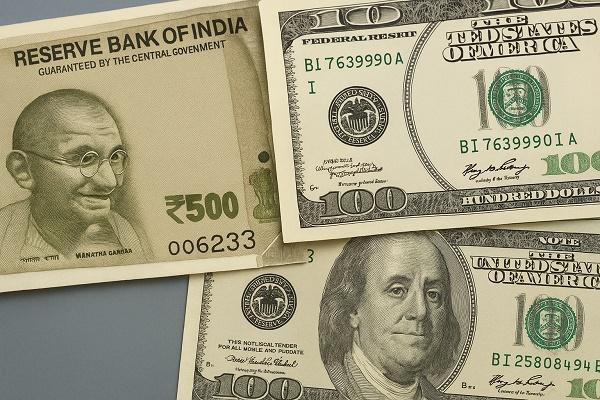
Mumbai (Maharashtra) [India], November 20 (Storyvilla): The Indian rupee is positioned for potential appreciation towards the 91–92 level against the US dollar, supported by record foreign portfolio investment (FPI) inflows and relatively stable crude oil prices, according to Anindya Banerjee, Head of Commodities Research at Kotak Neo.
In an exclusive conversation with Storyvilla News in Mumbai on Friday, Banerjee said India's improving macroeconomic position reflects a broader shift in global investor sentiment, with capital moving away from artificial intelligence (AI)-focused stocks towards more diversified, real-economy markets. He described this emerging investment trend as the "natural intelligence" or "NI" trade.
Highlighting the scale of foreign investment entering India, Banerjee said nearly USD 13 billion had flowed into the country during November, with 10 days still remaining in the month.
"Close to $13 billion has come in, in the month of November, and the month still has 10 days to go. If I'm not wrong, this is the highest monthly inflows we have seen ever," he said.
According to Banerjee, India's economic resilience has been supported by effective domestic policymaking despite challenges such as geopolitical uncertainties, an energy shock and a weak monsoon.
He believes these factors have created favourable conditions for the Indian currency, which he considers significantly undervalued compared with other currencies.
"Because of which, the Indian rupee is in a sweet spot. Now, if the RBI allows, the rupee can actually appreciate a lot, because it has been undervalued significantly compared to its peers... it can even appreciate towards the level of 91–92," he said.
However, he noted that the pace of appreciation will partly depend on the Reserve Bank of India's (RBI) approach towards managing dollar demand from oil marketing companies.
US Tariffs and Dollar Strength Remain Key Risks
Discussing external economic challenges, Banerjee said the immediate threat from potential US tariffs appears limited. He pointed to positive developments in trade discussions and changing political dynamics in Washington, which could reduce the likelihood of aggressive tariff measures.
Nevertheless, he identified the US dollar index reaching a 20-month high, the possibility of a global dollar shortage and broader risk aversion as important factors that investors should continue monitoring.
These developments could influence capital flows and currency movements in emerging markets, including India.
Brent Crude Prices Find Stability Between $88 and $100
On the global energy outlook, Banerjee said Brent crude prices have settled into a relatively comfortable range of $88 to $100 per barrel. This stability has helped ease immediate inflationary concerns for India, which remains heavily dependent on crude oil imports.
He explained that a significant upward movement beyond the $100 mark would likely require a fresh escalation in geopolitical tensions, particularly the ongoing conflict.
"If it gets above 100 now, it would only be because of an escalation in the war. If it gets back below 88, it can be generally because of de-escalation," he said.
Banerjee also highlighted that the earlier tightness in the physical crude oil market has eased considerably. Several crude grades and exchange-for-physical premiums, which had previously traded at steep premiums, have now moved towards flat or discounted levels.
Describing the current market environment, he said crude prices are likely to remain within this range until a major geopolitical development triggers the next significant movement.
"Overall, this is the current situation. It's like a sort of a sweet spot, but it needs a trigger, either escalation or de-escalation, to finally make the next big move," Banerjee said.
Commodity Market Volatility May Increase in 2027
Looking ahead to 2027, Banerjee cautioned that global financial and commodity markets could experience heightened volatility.
He advised Indian exporters, importers and businesses exposed to commodity price fluctuations to maintain strong hedging strategies to manage potential risks.
According to him, remaining unhedged in an increasingly uncertain global environment could expose businesses to substantial currency and commodity-related fluctuations.
Union Budget and India's Long-Term Investment Outlook
Commenting on expectations from the upcoming Union Budget, Banerjee clarified that foreign exchange policy primarily falls within the RBI's jurisdiction.
He expects the government to continue focusing on structural reforms aimed at improving India's economic fundamentals and attracting long-term foreign capital.
The combination of strong foreign investment inflows, stable crude oil prices and resilient domestic economic policies has created a supportive environment for the Indian rupee. However, the currency's future trajectory will depend on global dollar movements, geopolitical developments, oil prices and the RBI's policy decisions.